Cross-validation Cannot Be Used in Which of the Following Cases
For each fixed number of clusters pass the corresponding clustf function to crossval. The significance of training-validation-test split to help model selection.
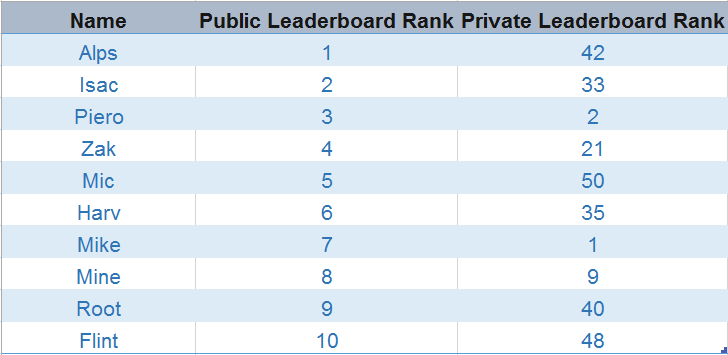
Cross Validation Cross Validation In Python R
Any single nested cross-validation run cannot be used for assessing the error of an optimal model because of its variance.

. One of the main reasons for using cross-validation instead of using the conventional validation eg. Cross-validation cannot be used in which of the following cases. Cross-validation PH1258x Courseware edX.
If you use the live script file for this example the clustf function is already included at the end of the file. A Comparing the performance of two different models in terms of. Third in the context of predictive models the term cross-validation is used in eleven articles to describe a.
Residual evaluation does not indicate how well a model can make new predictions on cases it has not already seen. Following are the complete working procedure of this method. In cross-validation you make a fixed number of folds or partitions of.
Underfitting occurs when a statistical model or machine learning algorithm cannot capture the underlying trend of the data. Cross-validation cannot be used in which of the following cases. The best result is then tested with the test fold and the.
Cross validation techniques tend to focus on not using the entire data set when building a model. For example if the data is obtained from different subjects with several samples per-subject. Cross-validation cannot be used with time series or sequence clustering models.
Some cases are removed before the data is modeled. In k-fold cross-validation the original sample is randomly partitioned into k equal sized subsamples. Otherwise you need to create the function at the end of your m file or add it as a file on the MATLAB path.
Generally if you want to specify advanced settings you should use the cross-validation stored procedures. Once the model has been built using the cases left often called the. A Comparing the performance of two different models in terms of accuracy.
These removed cases are often called the testing set. The method of cross-validation can evaluate model performance with two and often only one data set. That why to use cross validation is a procedure used to estimate the skill of the model on new data.
We demonstrated the use of repeated nested cross-validation in order to get an interval of the estimate. The following cross-validation splitters can be used to do that. Create a for loop that specifies the number of clusters k for each iteration.
This process is repeated so that each fold in the training set is used as a validation fold. C Classifying a new datapoint. This cross-validation technique divides the data into K subsets folds of almost equal size.
68 Q7 11 point graded Use the train function with kNN to select the best k for predicting tissue from gene expression on the tissue_gene_expression dataset from dslabsTry k seq172 for tuning parameters. B Tuning the K parameter in a KNN classification model. The three steps involved in cross-validation are as follows.
For example shows that the RSS under-estimates the by. The model is trained on the training set and then. In this tutorial you discovered how to do training-validation-test split of dataset and perform k -fold cross validation to select a model correctly and how to retrain the model after the selection.
Specifically no model that contains a KEY TIME column or a KEY SEQUENCE column can be included in cross-validation. Using the rest data-set train the model. Cross-validation is a technique in which we train our model using the subset of the data-set and then evaluate using the complementary subset of the data-set.
What is Cross Validation. Partitioning the data set into two sets of 70 for training and 30 for test is that there is not enough data available to partition it into separate training and test sets without losing significant modelling or testing capability. For this question do not split the data into test and train.
The grouping identifier for the samples is specified via the groups parameter. Second meaning of cross-validation refers to its use as a robustness check of coecients eg. Reserve some portion of sample data-set.
The data set is randomly split into ten disjoint subsets each containing approximately 10 of the data. Test the model using the reserve portion of. Split the dataset into K subsets randomly.
To determine the optimal value for a parameter k for an algorithm you can use nested cross-validation in which one of the folds in the training set is used to validate all possible k values. It is used to protect against overfitting in a predictive model particularly in a case where the amount of data may be limited. Cross-validation is a statistical method used to estimate the performance or accuracy of machine learning models.
You should have separate training and testing data and cross-validation should only happen within the training data-set typically for model selection and parameter tuning. Such a model is not of any use in the real world as it is not able to predict outcomes for new cases. You use the test data as is for the testing of your final model.
You dont use cross validation when youre doing the final test of your selected and tuned model. Out of these K folds one subset is used as a validation set and rest others are involved in training the model. In our survey of the literature this was the case in two articles eg.
However when a test set cannot be employed in the evaluation the prediction of future performance of the model based solely on extrapolation from the. Group k-fold GroupKFold is a variation of k-fold which ensures that the same group is not represented in both testing and training sets. 14 Cross-Validation and Generalized Cross-Validation The reason one cannot use the for model selection is that it generally under-estimates the generalization error of a model 1625.
Our results show that repetition is an essential component of reliable model assessment based on nested cross-validation. Traditional cross-validation techniques dont work on sequential data such as time-series because we cannot choose random data points and assign them to either the test set or the train set as it makes no sense to use the values from the. Sadly the k-fold cross-validation is not appropriate for evaluating imbalanced classifiers.
Of the k subsamples a single subsample is retained as the validation data for testing the model and the remaining k 1 subsamples are used as training dataThe cross-validation process is then repeated k times with each of the k subsamples used exactly once. A 10-fold cross-validation in particular the most commonly used error-estimation method in machine learning can easily break down in the case of class imbalances even if the skew is less extreme than the one previously considered.
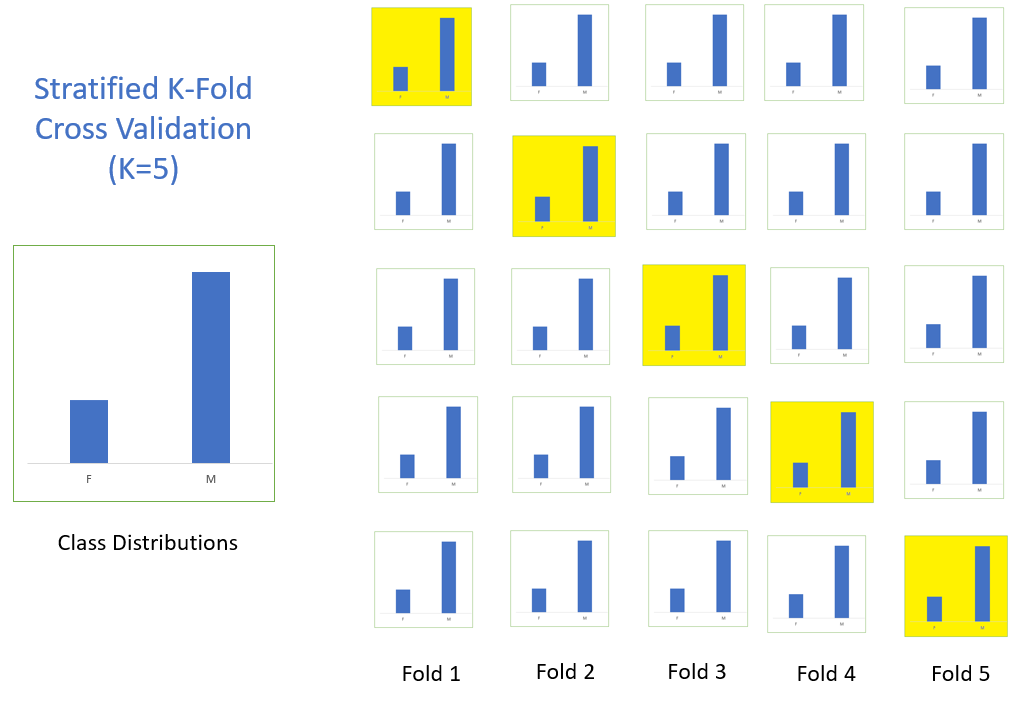
Cross Validation Cross Validation In Python R

Corporate Responsibility In The Digital Era Digital No Response Cross Functional Team
The V Model Software Development Functional Analysis Acceptance Testing


Comments
Post a Comment